SQF vs. BRC: Choosing the Right Food Safety Certification for Your Business

Food safety is more crucial than ever.

With food recalls and illnesses frequently in the news, manufacturers must implement effective food safety management systems.

Fortunately, several food safety certification schemes, such as SQF and BRC, are available.

Let’s explore SQF vs BRC to determine which is right for your business.

SQF and BRC Overview

What Is SQF?

SQF (Safe Quality Food) is a food safety management certification created by the SQF Institute. It offers a systematic approach to managing food safety and quality, helping manufacturers reduce the risk of foodborne illnesses.

What Is BRC?

BRC (British Retail Consortium) is another food safety certification scheme created by the British Retail Consortium. It ensures that products are safe and of the highest quality.

What Is the Difference Between SQF and BRC?

BRC focuses on product safety and quality management systems, while SQF emphasizes food safety and quality management. BRC is more about consistency, and SQF is about preventing contamination and food safety issues. Both certifications are widely recognized in the food industry.

Certification Standards

  • BRC: One standard.
  • SQF: Four levels:
    • Level 1: Food Safety Fundamentals
    • Level 2: Certified HACCP-Based Food Safety Plans
    • Level 3: Comprehensive Food Safety and Quality Management System
    • Level 4: Advanced Food Safety and Quality Management

Certification Process

  • SQF: Audits by licensed certification bodies, annual unannounced audits for all levels.
  • BRC: Audits by accredited third-party bodies, unannounced audits at highest levels only.

Certification Cost

SQF certification can be more expensive than BRC, especially for small businesses, due to consulting, audit, and registration fees. However, SQF emphasizes food safety culture and detailed management systems, potentially improving operations.

Which Is Better: SQF or BRC?

Industry Sector

Choose based on your industry’s specific requirements. For canned goods, SQF might be more detailed, while BRC may suit fresh produce manufacturers.

Business Size

BRC is often more affordable and less time-consuming for small businesses, focusing on product safety and quality management systems. SQF requires more documentation and is more common with large retailers in the US and Canada.

Resources Available

SQF is more demanding and rigorous, requiring significant resources for compliance. BRC offers flexible, scalable solutions, making it a better choice for smaller businesses with limited resources.

Business Benefits of Certification

  • Improved Customer Confidence
  • Increased Market Opportunities
  • Reduced Risk of Product Recalls
  • Enhanced Company Reputation

Becoming Certified

Engage the certification body to conduct an audit and certify your business. Plan ahead, as this process can take several months.

Final Thoughts on SQF vs BRC

Both SQF and BRC are globally recognized food safety and quality management systems. The choice depends on factors such as organization size, product portfolio, market demand, and quality and safety objectives. Continuous improvement, effective communication, and stakeholder engagement are essential for sustainable results.
FIBC Material: What Are Bulk Bags Made Of?

Bulk bags are made of polypropylene fabric, a strong, durable, and thermoplastic polymer FIBC material that’s resistant to moisture, chemicals, and UV radiation. Coatings provide extra protection, and bags feature woven polypropylene lifting loops for easy handling.

There are a number of bulk bag specs that are designed to meet Department of Transport (DOT) requirements for transport, including the:

  • Thickness of individual threads (denier)
  • Fabric weight (GSM)
  • Strength of the yarn and fabric.

From these engineering specs, each bag is specifically designed to pass a number of stress tests, including drop and jerk forces, that could affect the integrity of each bag during transport.

Build your professional bag simply better.

When purchasing an FIBC, the most important bulk bag spec is the bag capacity (or bag size), which can range from 500 to 4,000 pounds when filled.

Also, the styles and types of FIBC bags should be considered when choosing an FIBC to meet your product storage and transport applications:

  • Type A FIBC: No Electrostatic Protection
  • Type B FIBC: Surface Breakdown Voltage of <6kV
  • Type C FIBC: Electrically Conductive or Groundable
  • Type D FIBC: Static Dissipative

Within these FIBC bag types, you will find different styles to meet your bagging needs, including rectangular or four-panel bags, duffle top bags, and circular bulk bags. For each bag style, the manner in which they are constructed will be similar, other than the type of material, size, and shape.

If you’re unsure which of these bags you need, get in touch with the team here at Palmetto Industries so we can discuss your needs further.

The FIBC Bags Manufacturing Process

The FIBC bags manufacturing process we take is as follows:

  1. Extrusion
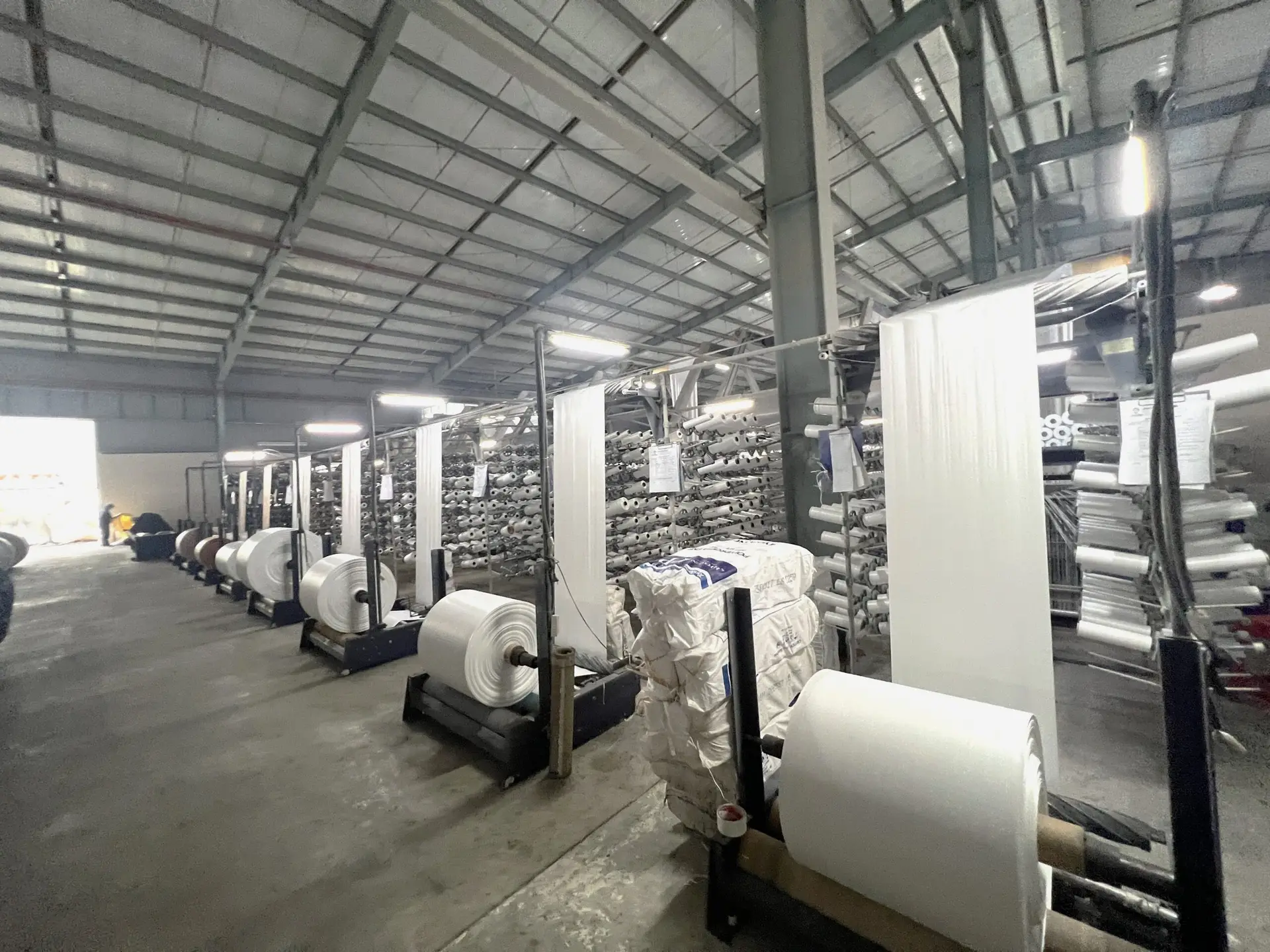
  2. Weaving
  3. Vacuuming
  4. Lamination
  5. Printing
  6. Cutting
  7. Sewing
  8. Final Testing

Let’s take a look at each of these steps in more detail so you can see exactly how we optimize your product for your needs:

1. Extrusion: Feeding in the FIBC material

The making of a bulk bag begins with the feeding of polypropylene (PP) resin and other additives into an extruder to produce PP tapes that vary in thickness and width.

The melted resin forms PP sheets that are stretched by rollers, then cut.

2. Weaving

The tapes are then wound onto bobbins to start the weaving process which will create the FIBC fabric.

The fabric weaving is performed on special looms to make either circular shaped bags or U-panels for the various other FIBC bag styles.

3. Vacuuming

If the fabric is to be coated, the bags are vacuumed to release dust particles, and the bag is then passed through a static eliminator.

4. Lamination

A lamination process then applies a protective coating of polypropylene which will increase the bags’ resistance to moisture and sifting. Breathable fabric bags are left uncoated.

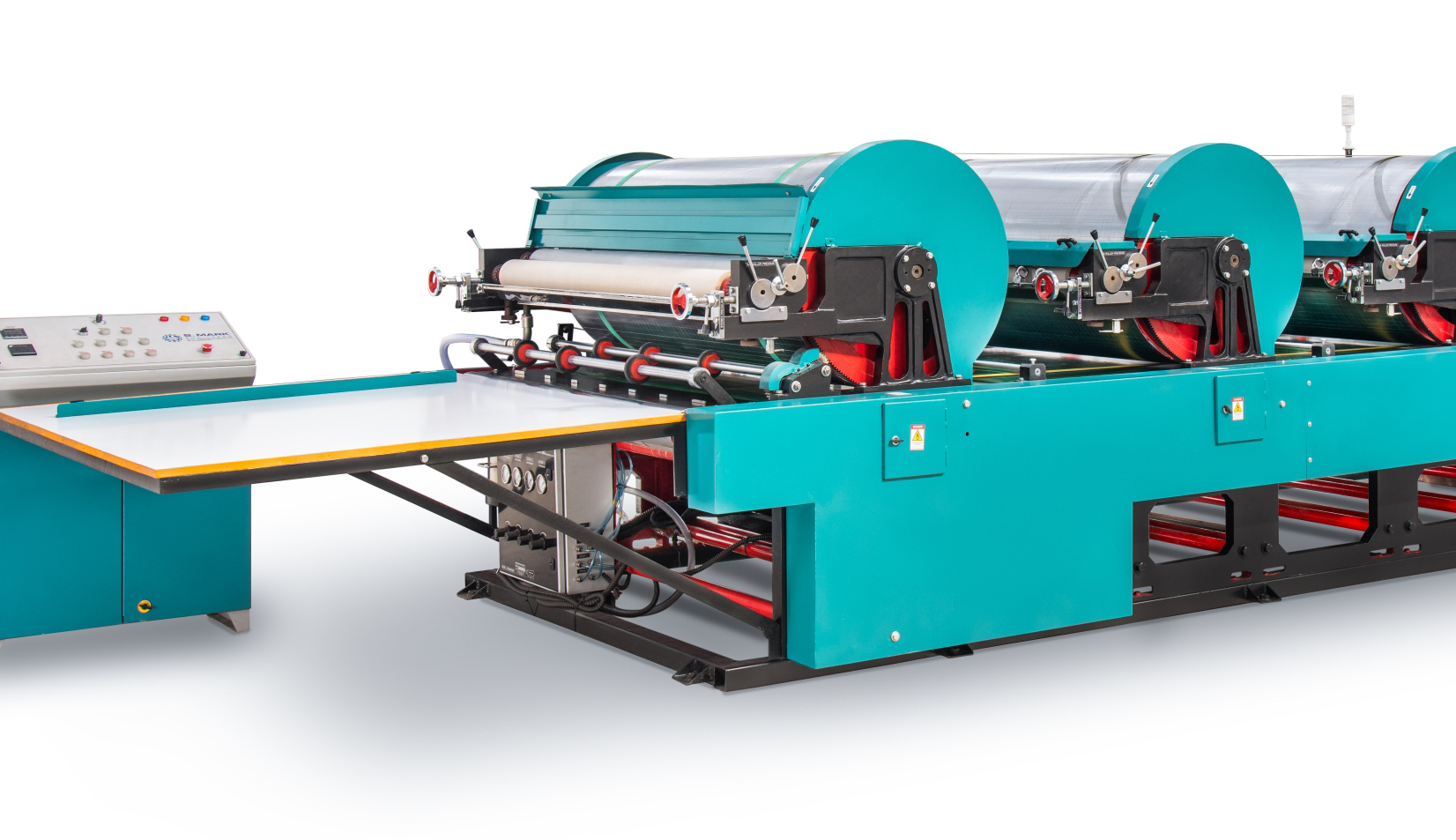
5. Printing

At this point, the bags are printed with an FDA-approved printing ink, suitable for food contact. The ink that is used will dry quickly to eliminate smears or running.

6. Cutting

Next, a computer program controls the precision cutting of the woven fabric from the rolls into the required sizes for the bag assembly process.

7. Sewing

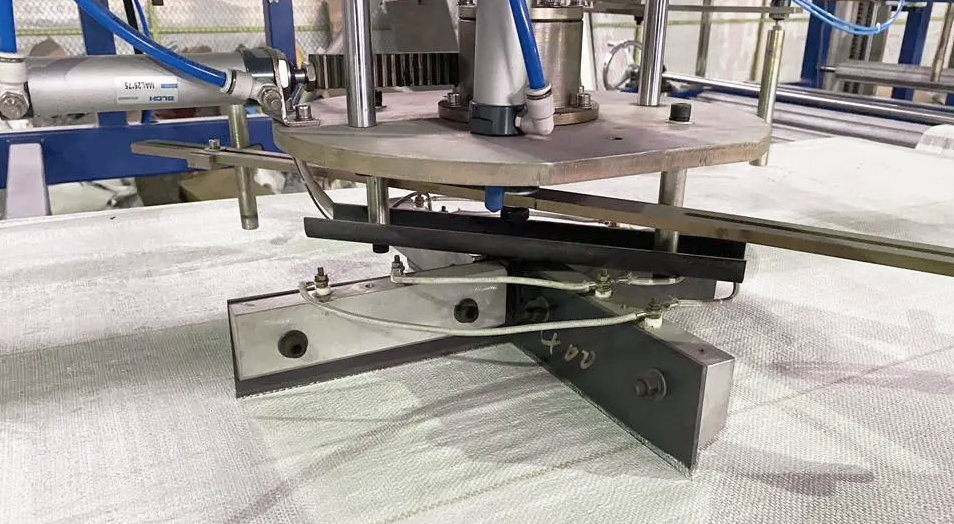
Finally, highly-trained employees complete the manufacturing process by sewing the fabric pieces together to create each bulk bag. All bags are sewn in an FDA-approved clean room to maintain sanitation requirements.

8. Final Testing

While we continuously QA our bulk bags through the manufacturing process, at this stage, filler cords are sewn into the seams and the bags will move on through different types of testing to final approval.

Key Takeaways On The FIBC Manufacturing Process

The FIBC manufacturing process involves several key steps, but, depending on the specific requirements, additional processes may be applied.

For instance, coatings like polyethylene or polypropylene can be applied to enhance moisture resistance, and printing machines may add logos or other information onto the fabric’s surface.

After the fabric is woven and any optional coatings or printing are applied, it is ready for bag construction and final inspection. This meticulous manufacturing process ensures that FIBCs meet industry standards and can withstand the rigors of transporting and storing bulk materials effectively.